

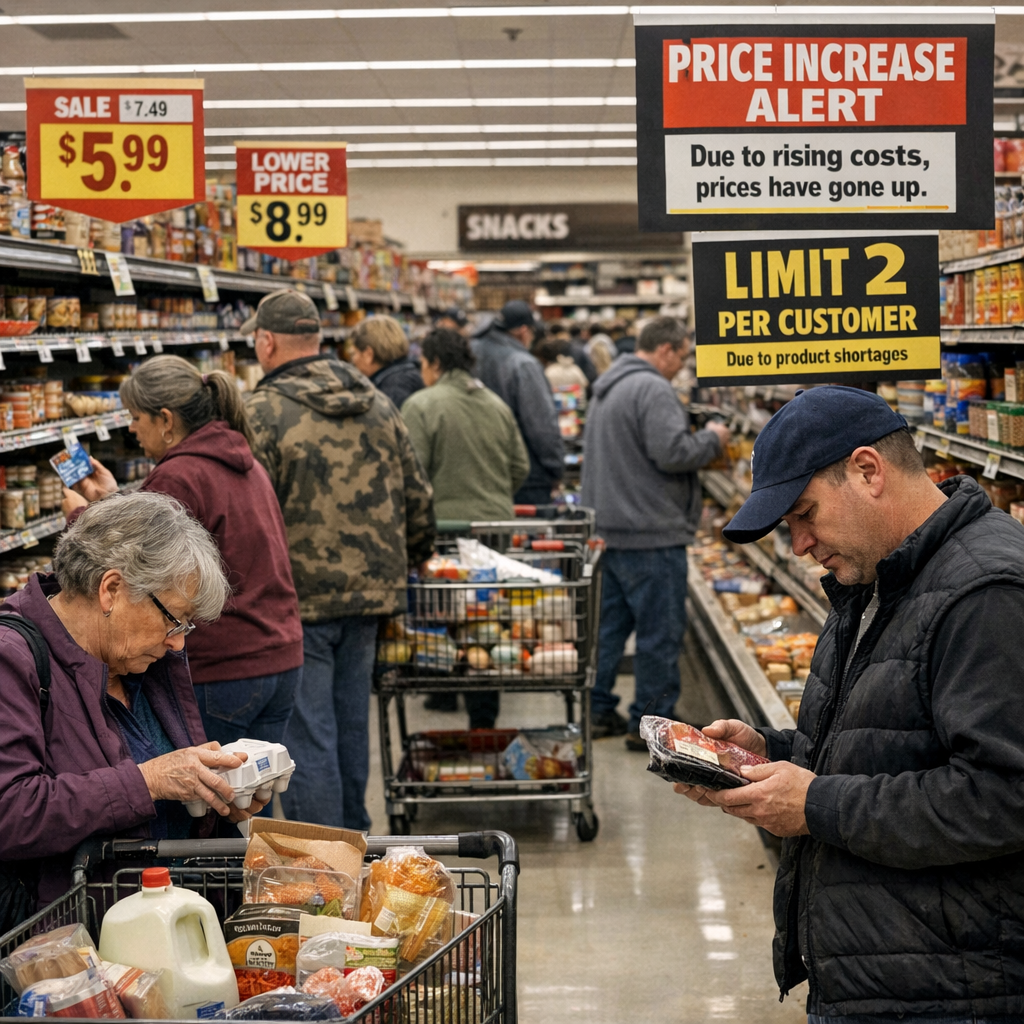
The U.S. economy is currently experiencing a complex interplay of factors affecting inflation, employment, and trade policies, all of which have significant implications for American households.
Inflation Trends
Recent data indicates a slowdown in inflation rates. The consumer price index increased by 2.8% in February compared to the previous year, down from 3% in January. Core prices, which exclude volatile food and energy categories, rose by 3.1%, marking the lowest increase since April 2021. This deceleration offers a measure of relief to consumers, particularly in grocery prices, which remained unchanged from January to February. However, specific items like eggs have seen substantial price hikes due to factors such as avian flu affecting supply chains.
Employment and Economic Growth
The labor market has shown signs of stagnation, with job gains dwindling. In July, U.S. employers shed 37,000 manufacturing jobs, and net hiring has plummeted over the last three months. The economy added just 73,000 jobs in July, 14,000 in June, and 19,000 in May, a combined 258,000 jobs lower than previously indicated. Additionally, the gross domestic product (GDP) grew at an annual rate of less than 1.3% during the first half of the year, down sharply from 2.8% growth last year. These indicators suggest a slowing economy, raising concerns about potential future downturns.
Trade Policies and Tariffs
Trade policies have been a focal point, with the administration implementing tariffs on imports from various countries, including Canada, Mexico, China, Europe, and India. These tariffs have introduced uncertainty into financial markets and could lead to higher consumer prices. Economists anticipate that the full impact of these tariffs will be felt in the coming months, potentially keeping inflation elevated through the end of the year. The administration’s approach to tariffs carries significant political risk, especially if it fails to deliver the promised economic benefits to the middle class.
Implications for Households
For American households, these economic developments translate into a mixed financial landscape. While the slowdown in inflation offers some respite, the stagnation in job growth and potential for higher prices due to tariffs pose challenges. Consumers may need to navigate these uncertainties by adjusting spending habits and staying informed about policy changes that could affect their financial well-being.
In conclusion, the current U.S. economic landscape is marked by a combination of slowing inflation, stagnant employment growth, and evolving trade policies. Staying informed and adaptable will be key for households aiming to maintain financial stability in these uncertain times.