

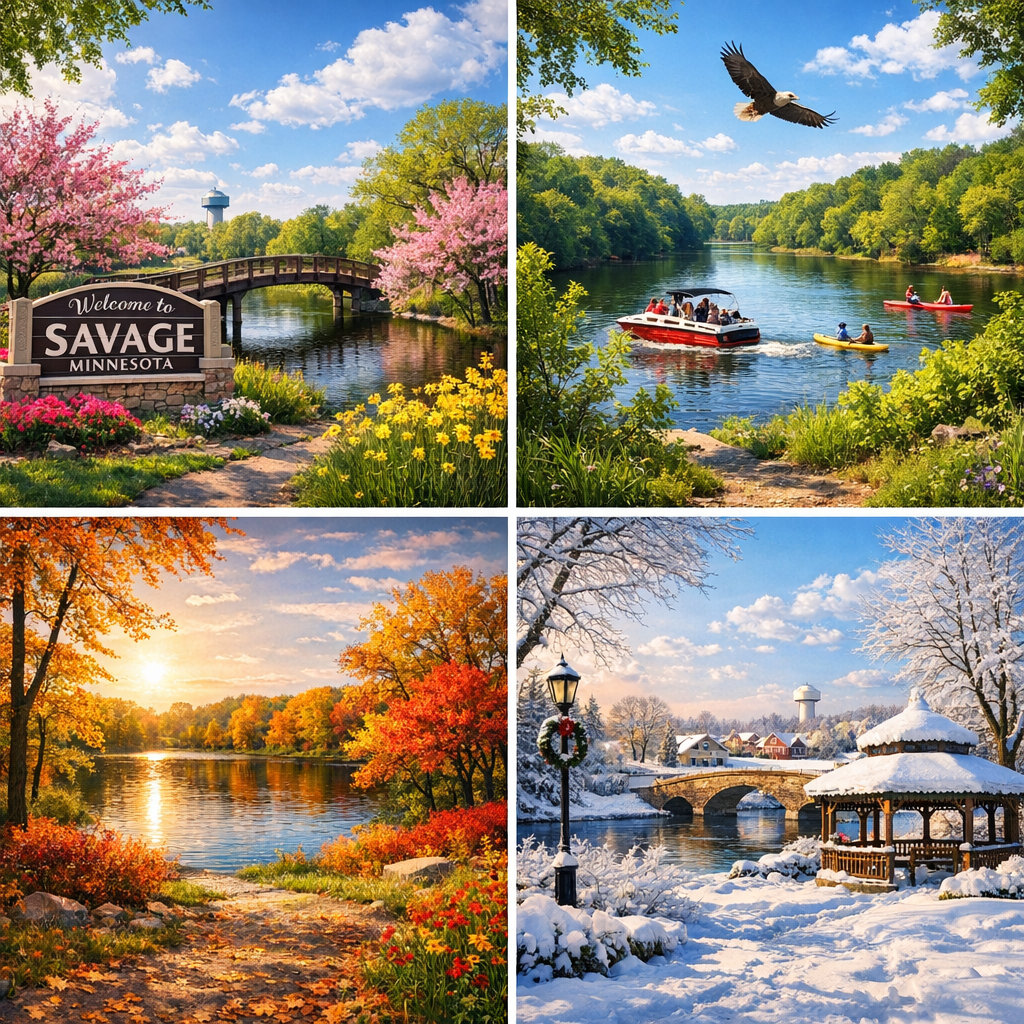
Savage, Minnesota, experiences a diverse climate characterized by distinct seasonal variations. Understanding these patterns is essential for residents and visitors alike.
Seasonal Temperature Variations
Savage’s climate is classified as Humid Continental, featuring hot summers and cold winters. Average high temperatures range from approximately 20.7°F (-6.3°C) in January to 80.6°F (27°C) in July. Correspondingly, average low temperatures fluctuate between 7.7°F (-13.5°C) in January and 63.3°F (17.4°C) in July.
Precipitation and Snowfall
Precipitation is fairly evenly distributed throughout the year, with June being the wettest month, averaging 4.34 inches (110 mm) of rainfall. Snowfall is prominent during the winter months, particularly from November through February.
Environmental Features
Savage is home to several notable natural features:
- Credit River: A 22-mile-long tributary of the Minnesota River, offering a natural escape within the city.
- McColl Pond: A 22-acre lake popular among anglers, featuring species like Bluegill and Largemouth Bass.
- Murphy-Hanrehan Park Reserve: Designated as an “Important Bird Area” by the National Audubon Society, it offers diverse ecosystems and recreational opportunities.
Climate Change Impacts
Climate change is expected to affect Minnesota’s water resources, leading to increased frequency and intensity of rainfall events, which can result in flooding and other environmental challenges.
By staying informed about Savage’s climate and environmental features, residents can better appreciate and protect the natural beauty of our community.