

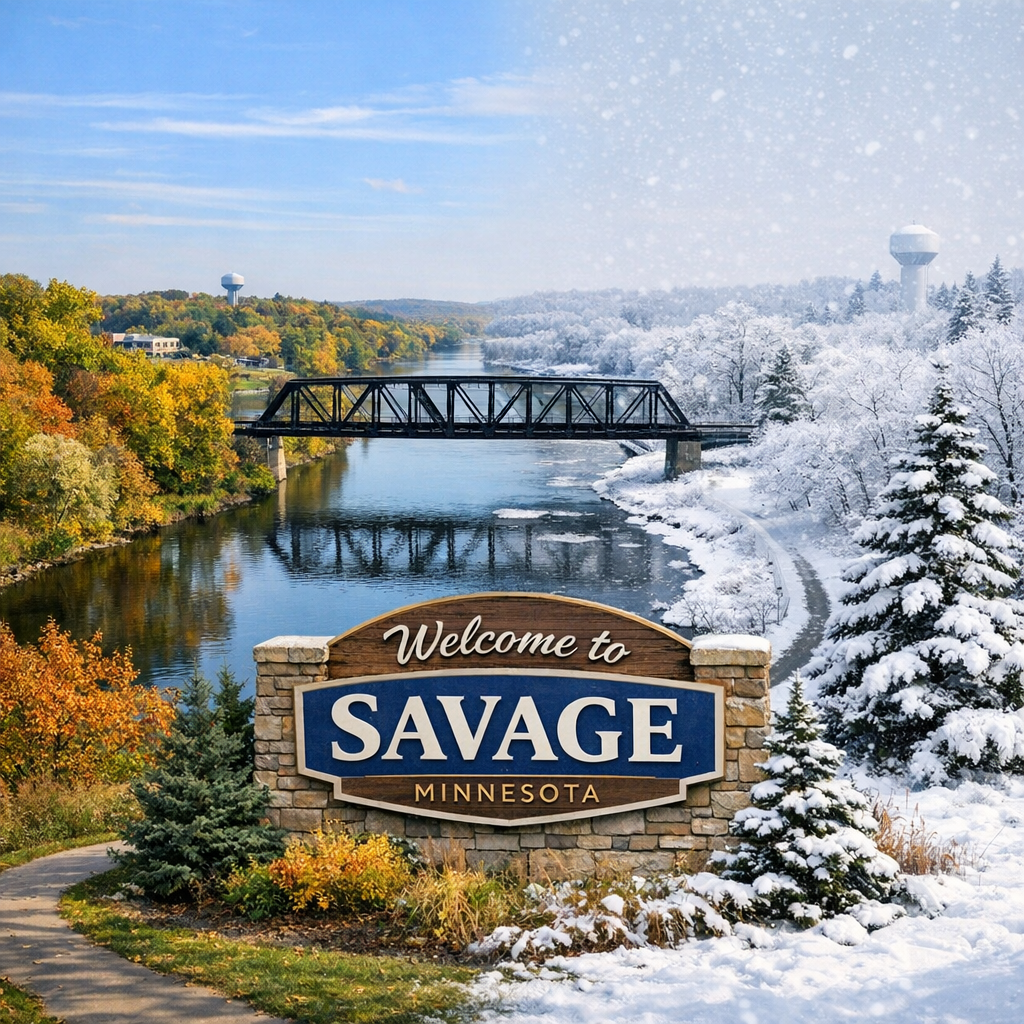
Savage, Minnesota, experiences a diverse climate characterized by distinct seasonal changes. Understanding these patterns can help residents and visitors prepare for the varying weather conditions throughout the year.
Spring: A Time of Transition
Spring in Savage marks a significant shift from the cold winter months. Average high temperatures rise from 39.4°F (4.1°C) in March to 56.8°F (13.8°C) in April, and further to 69.6°F (20.9°C) in May. This period also sees increased rainfall, with May averaging 4.3 inches (109.22 mm) of precipitation. The combination of warming temperatures and higher rainfall contributes to the blooming of local flora and the greening of the landscape.
Summer: Warm and Wet
Summers in Savage are warm and humid, with average high temperatures peaking at 83.4°F (28.6°C) in July. June is typically the wettest month, receiving an average of 5.17 inches (131.32 mm) of rainfall. The warm temperatures and ample rainfall support lush vegetation and provide ideal conditions for outdoor activities.
Autumn: Cooling Down
Autumn brings a gradual cooling, with average high temperatures decreasing from 73.7°F (23.2°C) in September to 59.6°F (15.3°C) in October, and further to 42.7°F (5.9°C) in November. Rainfall also decreases during this period, averaging 3.24 inches (82.3 mm) in September and 1.68 inches (42.67 mm) in November. The changing foliage offers picturesque landscapes, making it a favorite season for many residents.
Winter: Cold and Snowy
Winters in Savage are cold and snowy, with average high temperatures dropping to 24.0°F (-4.4°C) in January. Snowfall is common, contributing to the winter landscape. Residents should be prepared for freezing temperatures and potential snow accumulation during these months.
Understanding these seasonal patterns allows residents and visitors to plan accordingly, ensuring safety and enjoyment throughout the year.