

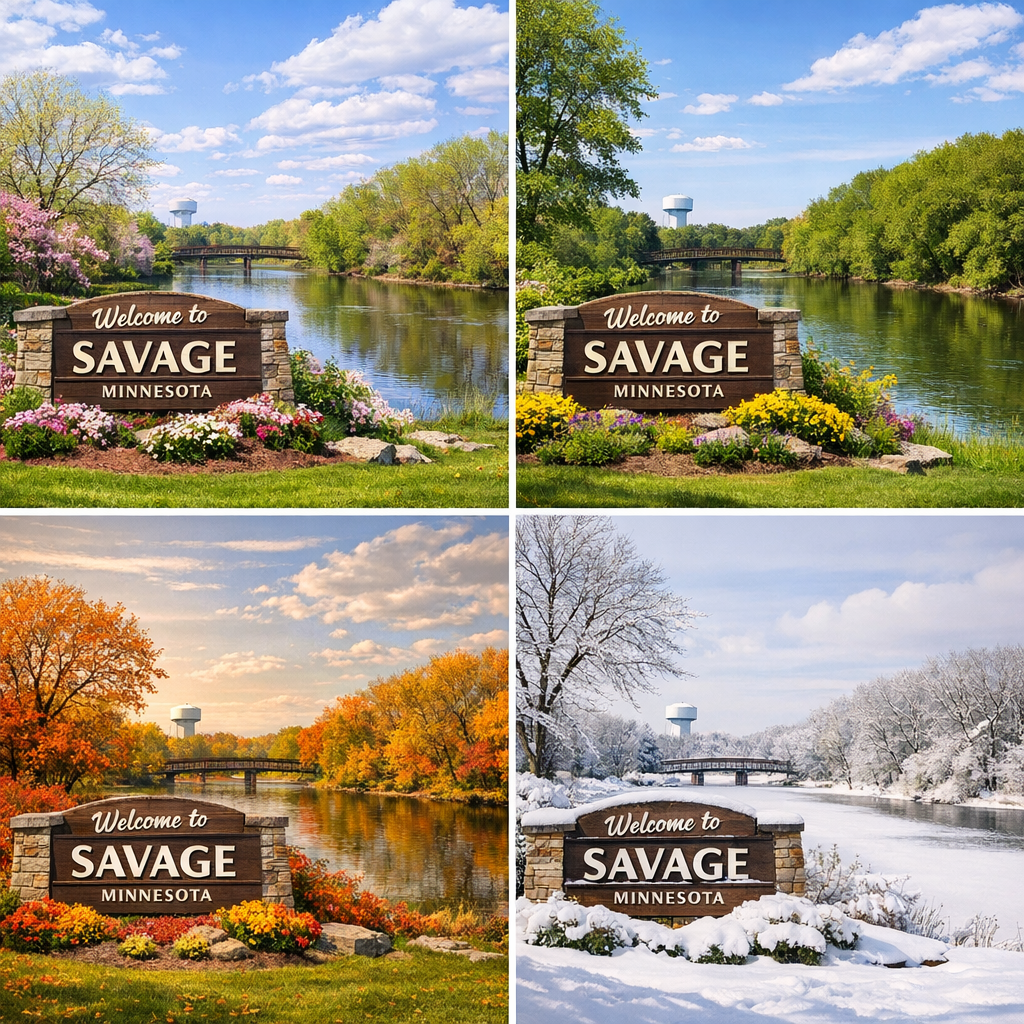
Savage, Minnesota, experiences a diverse climate characterized by distinct seasonal changes. Understanding these patterns can help residents and visitors prepare for the varying weather conditions throughout the year.
Spring: A Season of Renewal
Spring in Savage brings a gradual warming trend. Average high temperatures increase from 41.4°F (5.2°C) in March to 69.6°F (20.9°C) in May. This period also sees a rise in precipitation, with May averaging 4.3 inches (109.22 mm) of rainfall. The thawing landscape and blooming flora make it an ideal time for outdoor activities.
Summer: Warm and Wet
Summers are warm, with average high temperatures peaking at 83.4°F (28.6°C) in July. June is typically the wettest month, receiving about 5.17 inches (131.32 mm) of rainfall. The combination of warmth and moisture supports lush vegetation but also calls for preparedness against occasional thunderstorms.
Autumn: Crisp and Colorful
Autumn brings cooler temperatures and vibrant foliage. Average highs drop from 73.7°F (23.2°C) in September to 59.6°F (15.3°C) in October. Rainfall decreases during this season, averaging around 2.62 inches (66.55 mm) in October, providing comfortable conditions for outdoor activities.
Winter: Cold and Snowy
Winters are cold, with average low temperatures reaching 7.3°F (-13.7°C) in January. Snowfall is common, contributing to the region’s winter landscape. Residents should be prepared for freezing conditions and ensure proper winterization of homes and vehicles.
Environmental Considerations
Savage is home to several natural features, including the Credit River and McColl Pond. These areas offer recreational opportunities and contribute to the local ecosystem. The city emphasizes the importance of preserving these resources through responsible environmental practices.
By understanding Savage’s climate and natural environment, residents can better appreciate and adapt to the seasonal changes that define this vibrant community.